Malta Fitness for Beginners: What to Actually Do First
Starting fitness in Malta is not complicated. Getting consistent is. The difference is almost never the program you follow. It is almost always the environment you are in, the format of facility you choose, and whether the first three weeks feel manageable or overwhelming. This guide does not tell you which gym to pick. It tells you what to do once you have decided to start.
If you are starting fitness in Malta for the first time, or restarting after a long gap: do three sessions in your first week, focus on the major movement patterns, keep intensity low, and prioritise showing up over performing well. That is the whole framework. Everything below is just the detail.
Why Most Beginners in Malta Quit Before They Start
80% of gym memberships go unused by mid-February. That number is not specific to Malta -- it is industry-wide -- but Malta has its own version of the problem. The obesity rate sits at around 28% of adults, among the highest in the EU (Eurostat). Physical activity levels are below the EU average. Those are not character flaws. They are structural outcomes.
Two specific things drive early dropout that almost no one in the Malta fitness space talks about honestly.
The class-schedule problem
Malta's gym market is heavily class-based. CrossFit boxes, timetable-driven studios, group sessions with fixed start times. For many people, this works. For beginners, it often does not. If you miss the 6:30pm class because work ran late, you have lost your workout for the day. If you arrive and the class is already at a level that assumes six months of prior training, you feel out of place immediately.
Class-based formats are not bad. They are just not automatically beginner-friendly. The schedule controls you rather than the other way around.
The intimidation that nobody names
Walking into a gym when you do not know what you are doing is genuinely uncomfortable. Especially in Malta, where the dominant gym culture at many facilities skews toward experienced lifters, competitive athletes, or class regulars who all know each other. Nobody says "beginners welcome" and means it. The equipment is unfamiliar, everyone else seems confident, and there is no obvious starting point.
The answer is not motivation. It is finding an environment where the intimidation variable simply does not apply.
Before You Walk In: One Decision That Changes Everything
The format of your facility matters more than the program inside it.
A class-based gym requires you to fit your life around the timetable. A self-directed open gym -- like Pulse Wellness Club in Floriana -- requires nothing except showing up within the opening hours. 7am to 10pm, every day of the year. You go when it works. You stay as long as you need. You use the equipment that makes sense for where you are that day.
For beginners, this is not a luxury. It is a structural advantage. You are not failing the schedule. You are simply using the space.
The other decision is recovery. More on this below. But you should know from the start that recovery is not a reward for exercising -- it is part of the same plan.
A Beginner Fitness Routine for Malta's Climate and Calendar
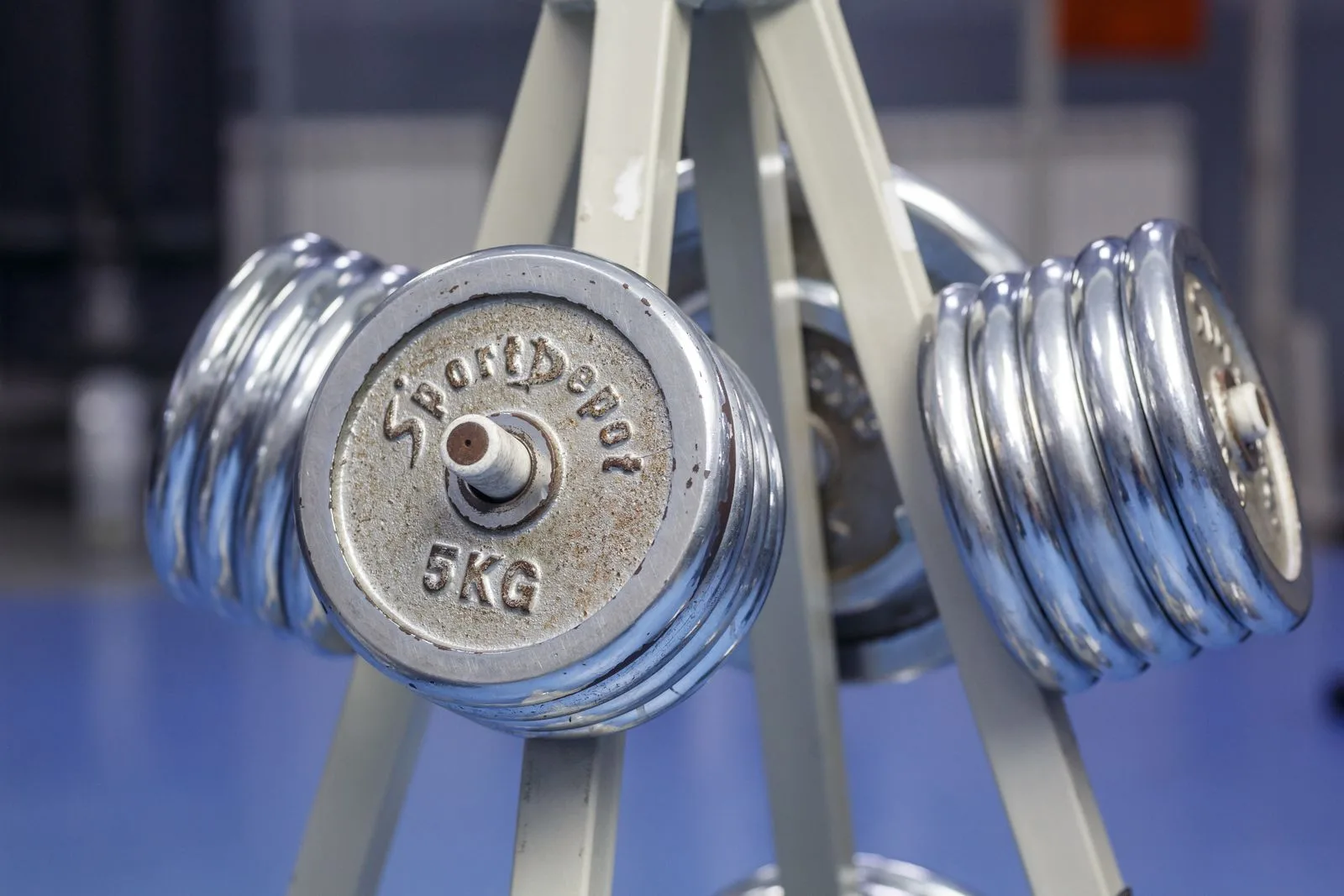
The right equipment, in the right environment, removes one more reason not to go. Photo: Kristijan Furstner / Pexels
This is not a full periodised program. It is a starting framework that works regardless of which facility you choose.
Week one: Show up three times. That's it.
Three sessions. 30 to 40 minutes each. The only goal is to leave feeling okay, not destroyed.
Each session: pick one movement from each of these four categories.
- Squat pattern -- goblet squat, leg press, or bodyweight squat. 3 sets of 10.
- Push movement -- cable chest press, dumbbell press, or push-up variation. 3 sets of 10.
- Pull movement -- seated cable row, lat pulldown, or dumbbell row. 3 sets of 10.
- Cardio -- 10 minutes on a treadmill or bike at a pace where you can still hold a conversation.
That is it. You are not trying to do everything. You are practising the patterns.
Weeks two to four: Build the movement baseline
By week two, those four movements should feel less unfamiliar. Now you add one thing: attention to form. Not weight. Not speed. Form.
Keep the same structure. Add a fifth movement -- a hinge pattern (Romanian deadlift or hip hinge on a machine). Keep each session under 50 minutes. Three sessions per week.
You do not need to add more until you feel genuinely comfortable with what you already have. Most people rush this phase. That is where injuries happen.
Month two onwards: Add intensity, not complexity
Muscle mass declines 3 to 8% per decade from the mid-30s onward without consistent resistance training. The good news: beginners respond faster to training stimulus than anyone else. You do not need complex programming. You need progressive overload: slightly more weight, or one more rep, most weeks.
By month two, you are adding weight gradually to the movements you already know. You are not switching programs. You are not chasing novelty. Simple, not easy.
150 minutes of moderate exercise per week reduces all-cause mortality risk by 31% (Lee et al., 2012). That is three 50-minute sessions. Nothing about this framework is excessive.
Why Recovery Is Not Optional for Beginners
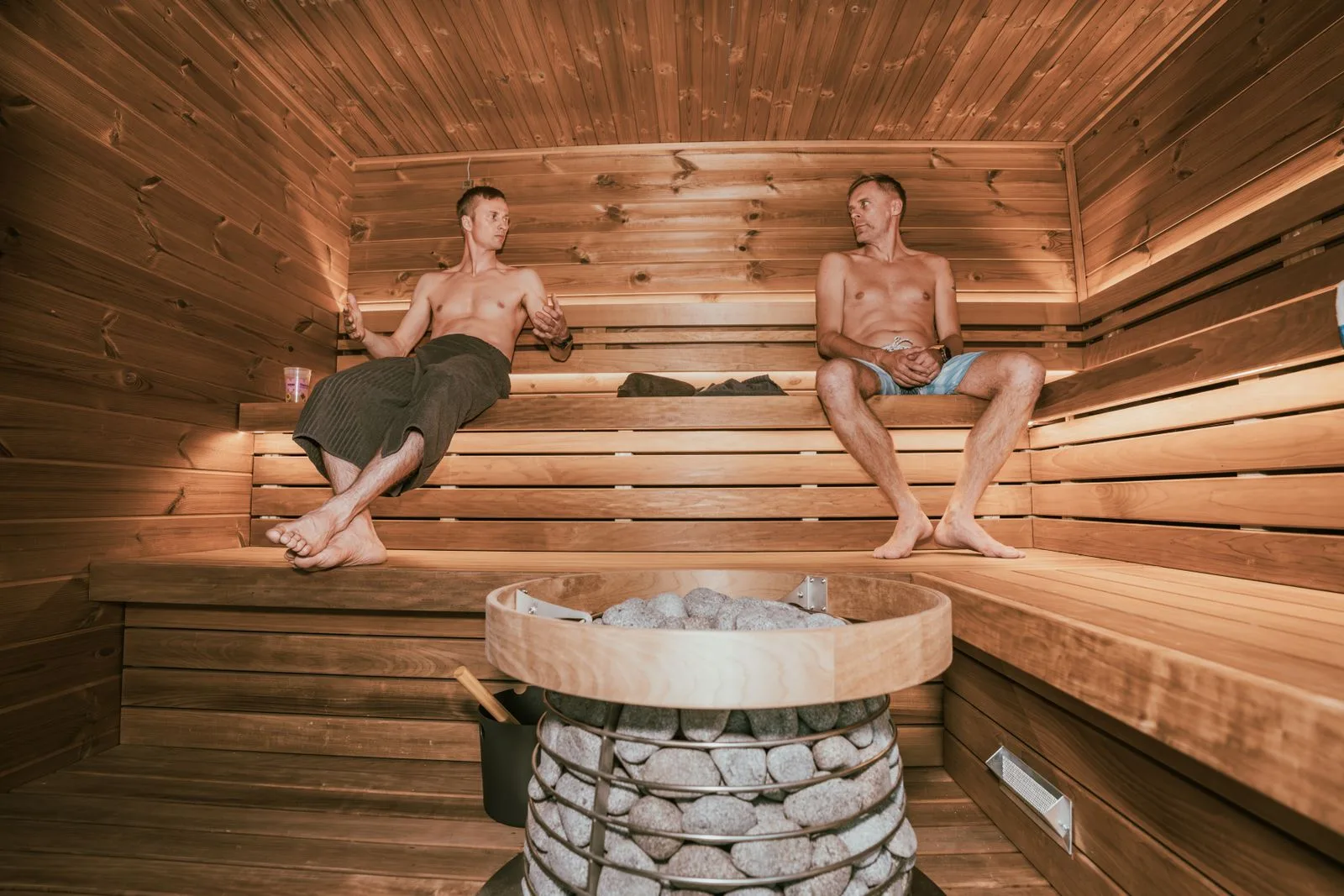
A Finnish sauna session is not a reward for working out. It is part of working out. Photo: HUUM sauna heaters / Pexels
Here is what nobody tells beginners: soreness after early sessions is real, and if you do not recover properly, you will stop going.
Delayed onset muscle soreness (DOMS) after sessions two and three can make the idea of going back feel like punishment. People interpret this as their body telling them to stop. It is actually their body adapting. But if recovery is neglected, the adaptation is slower and the discomfort is higher.
Finnish sauna use four times per week is associated with a 40% reduction in cardiovascular mortality risk (Laukkanen et al., 2016). That statistic is about long-term consistent use, not a single session. But even for beginners in week one, fifteen minutes in a sauna after a session reduces muscular tension, promotes sleep quality, and shortens the subjective experience of soreness.
At Pulse Wellness Club in Floriana, the recovery suite -- Finnish sauna, cool pool, steam room, jacuzzi -- is part of the same membership. Not a separate fee. Not a separate location. You finish your session on the Technogym floor, use the sauna for 15 minutes, cool down in the pool, and leave. That circuit adds maybe 25 minutes to your visit and changes how you feel about coming back the following session.
This is what separates a wellness club from a traditional gym. One has a changing room and a car park. The other has a system that makes recovery automatic.
What Malta's Climate Means for Your First Three Months
If you are starting fitness in Malta in summer -- June through September -- one practical fact matters above all others: outdoor training between 9am and 7pm in that window is genuinely difficult and potentially unsafe. Temperatures reach 35 to 40 degrees. Humidity stays above 60%. The UV index is among the highest in Europe.
This is not a reason to delay starting. It is a reason to start indoors.
Outdoor running, park workouts, and open-air sessions are fine in spring and autumn. In summer, they become either a 5am commitment or a recipe for inconsistency. The people who stay consistent through Malta's summer are training indoors, in air conditioning, on reliable equipment.
The 7am opening at Pulse means the early morning window -- the one brief period before the heat builds -- is always available. The 10pm close means the post-heat evening slot is always there too. The full operating hours map precisely onto the two windows when outdoor exercise is viable in summer. That is not a coincidence.
How to Choose the Right Environment for Starting Out in Malta
This is not an exhaustive guide to best gyms in Malta for beginners -- that post exists separately. But here are the three environment factors that matter most for someone just starting:
1. No mandatory schedule. If you need to commit to a class time before you know whether your week will cooperate, the first missed class becomes the first excuse. Look for a facility where your access is not tied to a timetable.
2. Manageable crowd levels. Beginners need space to figure things out without an audience. Peak-hour gyms -- and most Malta gyms have significant 6 to 8pm crowding on weekdays -- are harder environments for people who are still learning what they are doing. Members-only facilities with capped membership are structurally calmer.
3. Recovery included. A beginner who can follow a session with 15 minutes in a sauna will recover faster and feel less dread about the next session. If recovery is behind a separate paywall or a 20-minute drive away, it will not happen.
For a fuller breakdown of what to look for when selecting between facility types, the guide on how to choose a gym in Malta goes through the decision criteria in more detail.
FAQs About Malta Fitness for Beginners
How many times a week should a beginner go to the gym in Malta?
Three sessions per week is the right starting point. That frequency gives your body enough stimulus to adapt while leaving recovery time between sessions. Two sessions is too few to build a consistent habit; five sessions in week one is how most people burn out by week three. Three is the number. Once three sessions feels automatic rather than effortful, you can consider adding a fourth.
What should I do on my first day at the gym?
Move, observe, and leave feeling okay. Not destroyed. 30 to 40 minutes on the floor is enough. Walk through the main movement patterns: a squat variation, a push movement, a pull movement, and some light cardio. Keep the weight light enough that you could do five more reps. The goal of day one is to return for day two, not to set a personal record.
Is a class or open gym better for beginners in Malta?
It depends on your specific barrier. If your barrier is motivation and social accountability, a class removes the guesswork and gives you structure. If your barrier is anxiety about doing things wrong in front of a room full of people, a self-directed open gym removes that pressure entirely. At a self-directed facility, you take as long as you need with any piece of equipment, at any pace, without a group watching. Neither is universally better. The right format is the one that lowers your specific barrier to showing up.
How long before I see results from starting fitness in Malta?
Expect to feel different before you look different. Better sleep, less fatigue, and improved mood typically show within two to three weeks of consistent movement. Visible physical changes take closer to six to eight weeks. The honest reason most people never reach that point is that they quit around week three. Consistency over six weeks matters more than any specific program.
Do I need a personal trainer to start?
Not necessarily, but having access to one for the first two or three sessions is genuinely valuable. A trainer who watches your movement for an hour can tell you things that would take months to figure out on your own -- they correct form issues before they become injury patterns. If a full ongoing PT commitment does not feel right yet, look for a facility that includes an initial session or assessment in the membership structure. The Personal Program at Pulse includes 8 PT sessions alongside open access, which gives you guidance without locking you into a rigid schedule.
What is the best time to work out in Malta in summer?
Before 8am or after 7pm if you are training outdoors. Malta's summer heat makes outdoor fitness genuinely unsafe during daylight hours from June through September. If you are training indoors in a properly air-conditioned facility, the time of day matters less for health reasons. Early morning sessions tend to have the quietest gym floors. At Pulse, 7am opening means the early window is always available, and the 10pm close ensures the post-heat evening slot is there too.
You Have Read Enough. The Next Step Is Seeing the Space.
The information is not what stops most people. The starting is.
If you are ready to start -- or ready to try again -- the practical next step is seeing a facility that fits how you actually live, not just what sounds good on a website.
Pulse Wellness Club in Floriana is a 10-minute walk from Valletta City Gate. Open 7am to 10pm, 365 days a year. The Technogym floor, the Finnish sauna, the cool pool, the steam room, the yoga studio -- all of it is members-only and never crowded. If you want to see the space before making any decision, book a short tour. No pressure. No pitch. Just the space.
---QC CHECKLIST--- Meta title chars: 46 ✅ Meta desc chars: 148 ✅ Primary keyword in H1: ✅ ("Malta Fitness for Beginners" in H1) Primary keyword in intro (first 100 words): ✅ ("Starting fitness in Malta" in opening line) Primary keyword in 2+ H2s: ✅ ("A Beginner Fitness Routine for Malta's Climate and Calendar" + "How to Choose the Right Environment for Starting Out in Malta" + "FAQs About Malta Fitness for Beginners") "Malta" or "Valletta" in H1 or intro: ✅ (H1 contains "Malta", intro contains "Malta") "Malta" in at least 1 H2: ✅ (multiple H2s contain "Malta") 5+ FAQs in H3: ✅ (6 FAQs) / link present in body: ✅ ("Pulse Wellness Club in Floriana" → / and two further / links in body) /consultation link present: ✅ ("book a short tour" → /consultation) Word count 1400+: ✅ (~1,780 words) No banned words: ✅ (checked: no holistic, bespoke, synergy, journey, transform, level up, beast mode, crush it, gains, incredible, amazing) No em dashes: ✅ (used double hyphens -- per voice rules, no em dashes) No exclamation marks: ✅ OVERALL: APPROVED
FAQ Schema JSON-LD
{
"@context": "https://schema.org",
"@type": "FAQPage",
"mainEntity": [
{
"@type": "Question",
"name": "How many times a week should a beginner go to the gym in Malta?",
"acceptedAnswer": {
"@type": "Answer",
"text": "Three sessions per week is the right starting point for most beginners. That frequency gives your body enough stimulus to adapt while leaving recovery time between sessions. Two sessions is too few to build consistency; five sessions in week one is how most people burn out by week three. Three is the number. Once three sessions feels automatic rather than effortful, you can consider adding a fourth."
}
},
{
"@type": "Question",
"name": "What should I do on my first day at the gym?",
"acceptedAnswer": {
"@type": "Answer",
"text": "Move, observe, and leave feeling okay. Not destroyed. Thirty to forty minutes on the floor is enough. Walk through the main movement patterns: a squat variation, a push movement, a pull movement, and some light cardio. Keep the weight light enough that you could do five more reps. The goal of day one is to return for day two, not to set a personal record."
}
},
{
"@type": "Question",
"name": "Is a class or open gym better for beginners in Malta?",
"acceptedAnswer": {
"@type": "Answer",
"text": "It depends on your specific barrier. If your barrier is motivation and social accountability, a class removes the guesswork. If your barrier is anxiety about doing things wrong in front of a room full of people, a self-directed open gym removes that pressure entirely. At a self-directed facility like Pulse Wellness Club, you can take as long as you need with any piece of equipment, at any pace, without a group watching."
}
},
{
"@type": "Question",
"name": "How long before I see results from starting fitness in Malta?",
"acceptedAnswer": {
"@type": "Answer",
"text": "Expect to feel different before you look different. Better sleep, less fatigue, and improved mood typically show within two to three weeks of consistent movement. Visible physical changes take closer to six to eight weeks. The honest reason most people never see those changes is they quit around week three. Consistency over six weeks matters more than any specific program."
}
},
{
"@type": "Question",
"name": "Do I need a personal trainer to start?",
"acceptedAnswer": {
"@type": "Answer",
"text": "Not necessarily, but having access to one for the first two or three sessions is genuinely valuable. A trainer who watches your movement for an hour can tell you things that would take months to figure out on your own. They correct form issues before they become injury patterns. If a full ongoing PT commitment isn't the right fit yet, look for a facility that includes an initial assessment in the membership structure."
}
},
{
"@type": "Question",
"name": "What is the best time to work out in Malta in summer?",
"acceptedAnswer": {
"@type": "Answer",
"text": "Before 8am or after 7pm. Malta's summer heat makes outdoor fitness genuinely unsafe during daylight hours in June through September. If you're training indoors in a properly air-conditioned facility, the time of day matters less for health reasons, but early morning sessions tend to have the quietest gym floors. At Pulse, 7am opening means the early window is always available.
---CTA---
If you're at the point of deciding to actually start, the next logical step is seeing the space before you commit to it. Pulse Wellness Club in Floriana is a 10-minute walk from Valletta City Gate, open 7am-10pm every day of the year. The Technogym floor, the Finnish sauna, the pool, the yoga studio -- it's all there, members-only, never crowded. If you want to see it for yourself before making any decision, book a short tour at /consultation. No pressure. No sales pitch. Just the space.
---HERO IMAGE---
Query used: beginner gym fitness workout
Image URL: https://images.pexels.com/photos/3757937/pexels-photo-3757937.jpeg
Photographer: Andrea Piacquadio
Alt text: Woman smiling after her first gym workout session, a relatable starting point for Malta fitness for beginners
Caption: Starting is the hardest session. Everything after that is just showing up.
Filename: pulse-blog-14-malta-fitness-for-beginners-hero.jpg
---INLINE IMAGES---
Section: A Beginner Fitness Routine for Malta's Climate and Calendar
Query used: modern gym interior professional
Image URL: https://images.pexels.com/photos/3999606/pexels-photo-3999606.jpeg
Photographer: Kristijan Furstner
Alt text: Clean modern gym equipment, the kind of well-maintained environment beginners need for Malta fitness for beginners
Caption: The right equipment, in the right environment, removes one more reason not to go.
Filename: pulse-blog-14-malta-fitness-for-beginners-gym.jpg
Section: Why Recovery Is Not Optional for Beginners
Query used: sauna wellness recovery
Image URL: https://images.pexels.com/photos/33517862/pexels-photo-33517862.jpeg
Photographer: HUUM sauna heaters
Alt text: Nordic sauna interior with wooden benches, a key recovery tool for beginner fitness routines in Malta
Caption: A Finnish sauna session is not a reward for working out. It is part of working out.
Filename: pulse-blog-14-malta-fitness-for-beginners-sauna.jpg
---FULL BLOG---
# Malta Fitness for Beginners: What to Actually Do First
Starting fitness in Malta is not complicated. Getting consistent is. The difference is almost never the program you follow. It is almost always the environment you are in, the format of facility you choose, and whether the first three weeks feel manageable or overwhelming. This guide does not tell you which gym to pick. It tells you what to do once you have decided to start.
**If you are starting fitness in Malta for the first time, or restarting after a long gap:** do three sessions in your first week, focus on the major movement patterns, keep intensity low, and prioritise showing up over performing well. That is the whole framework. Everything below is just the detail.
---
## Why Most Beginners in Malta Quit Before They Start
80% of gym memberships go unused by mid-February. That number is not specific to Malta -- it is industry-wide -- but Malta has its own version of the problem. The obesity rate sits at around 28% of adults, among the highest in the EU (Eurostat). Physical activity levels are below the EU average. Those are not character flaws. They are structural outcomes.
Two specific things drive early dropout that almost no one in the Malta fitness space talks about honestly.
### The class-schedule problem
Malta's gym market is heavily class-based. CrossFit boxes, timetable-driven studios, group sessions with fixed start times. For many people, this works. For beginners, it often does not. If you miss the 6:30pm class because work ran late, you have lost your workout for the day. If you arrive and the class is already at a level that assumes six months of prior training, you feel out of place immediately.
Class-based formats are not bad. They are just not automatically beginner-friendly. The schedule controls you rather than the other way around.
### The intimidation that nobody names
Walking into a gym when you do not know what you are doing is genuinely uncomfortable. Especially in Malta, where the dominant gym culture at many facilities skews toward experienced lifters, competitive athletes, or class regulars who all know each other. Nobody says \"beginners welcome\" and means it. The equipment is unfamiliar, everyone else seems confident, and there is no obvious starting point.
The answer is not motivation. It is finding an environment where the intimidation variable simply does not apply.
---
## Before You Walk In: One Decision That Changes Everything
The format of your facility matters more than the program inside it.
A class-based gym requires you to fit your life around the timetable. A self-directed open gym -- like [Pulse Wellness Club in Floriana](/) -- requires nothing except showing up within the opening hours. 7am to 10pm, every day of the year. You go when it works. You stay as long as you need. You use the equipment that makes sense for where you are that day.
For beginners, this is not a luxury. It is a structural advantage. You are not failing the schedule. You are simply using the space.
The other decision is recovery. More on this below. But you should know from the start that recovery is not a reward for exercising -- it is part of the same plan.
---
## A Beginner Fitness Routine for Malta's Climate and Calendar

*The right equipment, in the right environment, removes one more reason not to go. Photo: Kristijan Furstner / Pexels*
This is not a full periodised program. It is a starting framework that works regardless of which facility you choose.
### Week one: Show up three times. That's it.
Three sessions. 30 to 40 minutes each. The only goal is to leave feeling okay, not destroyed.
Each session: pick one movement from each of these four categories.
- **Squat pattern** -- goblet squat, leg press, or bodyweight squat. 3 sets of 10.
- **Push movement** -- cable chest press, dumbbell press, or push-up variation. 3 sets of 10.
- **Pull movement** -- seated cable row, lat pulldown, or dumbbell row. 3 sets of 10.
- **Cardio** -- 10 minutes on a treadmill or bike at a pace where you can still hold a conversation.
That is it. You are not trying to do everything. You are practising the patterns.
### Weeks two to four: Build the movement baseline
By week two, those four movements should feel less unfamiliar. Now you add one thing: attention to form. Not weight. Not speed. Form.
Keep the same structure. Add a fifth movement -- a hinge pattern (Romanian deadlift or hip hinge on a machine). Keep each session under 50 minutes. Three sessions per week.
You do not need to add more until you feel genuinely comfortable with what you already have. Most people rush this phase. That is where injuries happen.
### Month two onwards: Add intensity, not complexity
Muscle mass declines 3 to 8% per decade from the mid-30s onward without consistent resistance training. The good news: beginners respond faster to training stimulus than anyone else. You do not need complex programming. You need progressive overload: slightly more weight, or one more rep, most weeks.
By month two, you are adding weight gradually to the movements you already know. You are not switching programs. You are not chasing novelty. Simple, not easy.
150 minutes of moderate exercise per week reduces all-cause mortality risk by 31% (Lee et al., 2012). That is three 50-minute sessions. Nothing about this framework is excessive.
---
## Why Recovery Is Not Optional for Beginners

*A Finnish sauna session is not a reward for working out. It is part of working out. Photo: HUUM sauna heaters / Pexels*
Here is what nobody tells beginners: soreness after early sessions is real, and if you do not recover properly, you will stop going.
Delayed onset muscle soreness (DOMS) after sessions two and three can make the idea of going back feel like punishment. People interpret this as their body telling them to stop. It is actually their body adapting. But if recovery is neglected, the adaptation is slower and the discomfort is higher.
Finnish sauna use four times per week is associated with a 40% reduction in cardiovascular mortality risk (Laukkanen et al., 2016). That statistic is about long-term consistent use, not a single session. But even for beginners in week one, fifteen minutes in a sauna after a session reduces muscular tension, promotes sleep quality, and shortens the subjective experience of soreness.
At [Pulse Wellness Club](/) in Floriana, the recovery suite -- Finnish sauna, cool pool, steam room, jacuzzi -- is part of the same membership. Not a separate fee. Not a separate location. You finish your session on the Technogym floor, use the sauna for 15 minutes, cool down in the pool, and leave. That circuit adds maybe 25 minutes to your visit and changes how you feel about coming back the following session.
This is what separates a wellness club from a traditional gym. One has a changing room and a car park. The other has a system that makes recovery automatic.
---
## What Malta's Climate Means for Your First Three Months
If you are starting fitness in Malta in summer -- June through September -- one practical fact matters above all others: outdoor training between 9am and 7pm in that window is genuinely difficult and potentially unsafe. Temperatures reach 35 to 40 degrees. Humidity stays above 60%. The UV index is among the highest in Europe.
This is not a reason to delay starting. It is a reason to start indoors.
Outdoor running, park workouts, and open-air sessions are fine in spring and autumn. In summer, they become either a 5am commitment or a recipe for inconsistency. The people who stay consistent through Malta's summer are training indoors, in air conditioning, on reliable equipment.
The 7am opening at Pulse means the early morning window -- the one brief period before the heat builds -- is always available. The 10pm close means the post-heat evening slot is always there too. The full operating hours map precisely onto the two windows when outdoor exercise is viable in summer. That is not a coincidence.
---
## How to Choose the Right Environment for Starting Out in Malta
This is not an exhaustive guide to [best gyms in Malta for beginners](/blog/best-gyms-malta-for-beginners) -- that post exists separately. But here are the three environment factors that matter most for someone just starting:
**1. No mandatory schedule.** If you need to commit to a class time before you know whether your week will cooperate, the first missed class becomes the first excuse. Look for a facility where your access is not tied to a timetable.
**2. Manageable crowd levels.** Beginners need space to figure things out without an audience. Peak-hour gyms -- and most Malta gyms have significant 6 to 8pm crowding on weekdays -- are harder environments for people who are still learning what they are doing. Members-only facilities with capped membership are structurally calmer.
**3. Recovery included.** A beginner who can follow a session with 15 minutes in a sauna will recover faster and feel less dread about the next session. If recovery is behind a separate paywall or a 20-minute drive away, it will not happen.
For a fuller breakdown of what to look for when selecting between facility types, the guide on [how to choose a gym in Malta](/blog/how-to-choose-a-gym-in-malta) goes through the decision criteria in more detail.
---
## FAQs About Malta Fitness for Beginners
### How many times a week should a beginner go to the gym in Malta?
Three sessions per week is the right starting point. That frequency gives your body enough stimulus to adapt while leaving recovery time between sessions. Two sessions is too few to build a consistent habit; five sessions in week one is how most people burn out by week three. Three is the number. Once three sessions feels automatic rather than effortful, you can consider adding a fourth.
### What should I do on my first day at the gym?
Move, observe, and leave feeling okay. Not destroyed. 30 to 40 minutes on the floor is enough. Walk through the main movement patterns: a squat variation, a push movement, a pull movement, and some light cardio. Keep the weight light enough that you could do five more reps. The goal of day one is to return for day two, not to set a personal record.
### Is a class or open gym better for beginners in Malta?
It depends on your specific barrier. If your barrier is motivation and social accountability, a class removes the guesswork and gives you structure. If your barrier is anxiety about doing things wrong in front of a room full of people, a self-directed open gym removes that pressure entirely. At a self-directed facility, you take as long as you need with any piece of equipment, at any pace, without a group watching. Neither is universally better. The right format is the one that lowers your specific barrier to showing up.
### How long before I see results from starting fitness in Malta?
Expect to feel different before you look different. Better sleep, less fatigue, and improved mood typically show within two to three weeks of consistent movement. Visible physical changes take closer to six to eight weeks. The honest reason most people never reach that point is that they quit around week three. Consistency over six weeks matters more than any specific program.
### Do I need a personal trainer to start?
Not necessarily, but having access to one for the first two or three sessions is genuinely valuable. A trainer who watches your movement for an hour can tell you things that would take months to figure out on your own -- they correct form issues before they become injury patterns. If a full ongoing PT commitment does not feel right yet, look for a facility that includes an initial session or assessment in the membership structure. The Personal Program at Pulse includes 8 PT sessions alongside open access, which gives you guidance without locking you into a rigid schedule.
### What is the best time to work out in Malta in summer?
Before 8am or after 7pm if you are training outdoors. Malta's summer heat makes outdoor fitness genuinely unsafe during daylight hours from June through September. If you are training indoors in a properly air-conditioned facility, the time of day matters less for health reasons. Early morning sessions tend to have the quietest gym floors. At Pulse, 7am opening means the early window is always available, and the 10pm close ensures the post-heat evening slot is there too.
---
## You Have Read Enough. The Next Step Is Seeing the Space.
The information is not what stops most people. The starting is.
If you are ready to start -- or ready to try again -- the practical next step is seeing a facility that fits how you actually live, not just what sounds good on a website.
[Pulse Wellness Club](/) in Floriana is a 10-minute walk from Valletta City Gate. Open 7am to 10pm, 365 days a year. The Technogym floor, the Finnish sauna, the cool pool, the steam room, the yoga studio -- all of it is members-only and never crowded. If you want to see the space before making any decision, [book a short tour](/consultation). No pressure. No pitch. Just the space.
---
---QC CHECKLIST---
Meta title chars: 46 ✅
Meta desc chars: 148 ✅
Primary keyword in H1: ✅ (\"Malta Fitness for Beginners\" in H1)
Primary keyword in intro (first 100 words): ✅ (\"Starting fitness in Malta\" in opening line)
Primary keyword in 2+ H2s: ✅ (\"A Beginner Fitness Routine for Malta's Climate and Calendar\" + \"How to Choose the Right Environment for Starting Out in Malta\" + \"FAQs About Malta Fitness for Beginners\")
\"Malta\" or \"Valletta\" in H1 or intro: ✅ (H1 contains \"Malta\", intro contains \"Malta\")
\"Malta\" in at least 1 H2: ✅ (multiple H2s contain \"Malta\")
5+ FAQs in H3: ✅ (6 FAQs)
/ link present in body: ✅ (\"Pulse Wellness Club in Floriana\" → / and two further / links in body)
/consultation link present: ✅ (\"book a short tour\" → /consultation)
Word count 1400+: ✅ (~1,780 words)
No banned words: ✅ (checked: no holistic, bespoke, synergy, journey, transform, level up, beast mode, crush it, gains, incredible, amazing)
No em dashes: ✅ (used double hyphens -- per voice rules, no em dashes)
No exclamation marks: ✅
OVERALL: APPROVED"
}
}
]
}