A gym with pool and sauna in Malta does exist. But not many of them. And the ones that tick all three boxes are clustered in one part of the island, which may or may not be anywhere near where you actually live or work.
Here is what the landscape actually looks like — and what to think about before you commit to a membership.
Where gyms with pool and sauna actually exist in Malta
Most people searching this combination expect a list. Here it is, plainly.
Count the facilities on the island that put a genuine gym floor and an indoor pool in the same building and you reach five. Ask each of them to add a documented heat facility — a Finnish sauna, a steam room, a Turkish hammam — and the list gets shorter still. What most of them share is a postcode in or around St. Julians.
The St. Julians concentration
Two facilities dominate at that end of the island. LivingWell at the Hilton Malta, in Portomaso, pairs a 20-metre heated indoor pool with a sauna, a steam room and Technogym-equipped gym space, and runs more than 70 classes a week; it sells fixed-length access — €85 for 7 days, €150 for 28 days — rather than a rolling monthly membership. Cynergi Health and Fitness, also in St. Julians, has a 17-metre pool, a sauna, a steam room and a Turkish hammam alongside the gym floor and more than 40 weekly classes, at roughly €84 a month. Prices last checked: August 2026. Both are legitimate options. Both require you to be in St. Julians.
For anyone living in Valletta, Floriana, Birgu, Senglea, or commuting into central Malta from the south, that is a 20-to-40 minute detour. Each way. That changes the practical maths on whether you actually go.
The Floriana exception
Pulse Wellness Club sits in Floriana, within the 16th-century fortifications that border Valletta, 8 minutes' walk from Valletta City Gate. It is the only facility in this part of Malta combining a Technogym open gym with an indoor pool, Finnish-style sauna, and jacuzzi under a single membership.
If you work in or near Valletta, or if every bus route you take terminates at the Valletta bus terminus, this geography is not a minor detail. It is the difference between a facility you can reach without rerouting your day, and one that requires planning a separate trip.
Every gym with pool and sauna in Malta, compared
Five facilities in Malta put a gym floor and an indoor pool under one roof. This is the list, with what each one actually documents rather than what its marketing implies.
| Facility | Where | Pool | Heat facility | Price (checked Aug 2026) |
|---|---|---|---|---|
| LivingWell at Hilton Malta | Portomaso, St. Julians | 20m heated indoor | Sauna, steam room | €85 / 7 days; €150 / 28 days |
| Cynergi Health and Fitness | St. Julians | 17m indoor | Sauna, steam room, Turkish hammam | around €84 / month |
| YUE Malta | Naxxar | 25m lap pool (3 lanes) plus hydro pool | Spa facilities; sauna not separately listed | not checked |
| Sunny Coast Leisure Club | Qawra | Indoor pool | Not listed | not checked |
| Pulse Wellness Club | Floriana, 8 minutes' walk from Valletta City Gate | Indoor cool pool | Finnish sauna, steam room, jacuzzi | €69 / €99 / €149 per month |
On format, which the prices alone will not tell you: LivingWell and Cynergi are class-heavy operations, running roughly 70 and 40 sessions a week respectively. YUE and Sunny Coast run conventional gym floors. Pulse runs an open Technogym floor with no class timetable at all. Prices last checked: August 2026; YUE and Sunny Coast were not price-checked in that pass, so their cells are blank rather than guessed.
Two more venues surface in this search and are worth ruling out early, because they are spas rather than gyms. Sanya Malta Spa in Naxxar has the indoor pool, the jacuzzis, the sauna and the steam room, but no training floor at all. Novotel Malta Sliema, operated by Carisma Spa, is spa-forward rather than gym-forward — better suited to a recovery session than to a full training day.
That distinction is the one most searches miss. A spa day gives you thermal access in a holiday context: booked ahead, paid per visit, surrounded by people on a relaxation afternoon. It is an occasional treat, not a recovery practice. What you are actually looking for is somewhere you train and then recover without switching venue or booking anything — finish on the gym floor, walk to the sauna, then the pool, then the jacuzzi if you want the warm end of the range. That integration is the whole point, and it is why the list above is five long instead of fifty.
What a gym with pool and sauna in Malta actually costs
Price comparisons on this island mislead more often than not, because they quote a gym membership rate without saying whether the pool and the heat facilities are inside it or charged on top.
Three questions decide the real number. Is pool access included in the base rate? Is the sauna included, or gated behind a premium tier? And is it a rolling monthly membership or a fixed-length pass?
At the St. Julians end, Cynergi's full-access tier is around €84 a month with the pool and heat suite included. LivingWell at the Hilton sells fixed-length access instead of a rolling membership: €85 for 7 days, or €150 for 28 days. Read that last figure carefully against a monthly rate — 28 days is not a calendar month, and a pass that lapses is not a membership that renews. Prices last checked: August 2026.
Pulse Wellness Club membership: Off-Peak €69 per month, All Access €99 per month, VIP €149 per month. Every tier includes the full Technogym floor, indoor pool, Finnish sauna, jacuzzi, relaxation room and The Admiral's Landing lounge. VIP adds one expert massage by Carisma Spa each month. The steam room sits alongside the Finnish sauna and is included at every tier too. Off-Peak is the entry point and runs on the off-peak window, 10am to 4pm; All Access and VIP cover the full opening hours.
There is no separate spa fee at any tier and no upgrade required to reach the recovery suite. That is worth checking wherever you are looking: some facilities in Malta charge separately for spa access, restrict the sauna to premium tiers, or require a spa booking on top of the membership.
Why the combination matters — not just as amenities
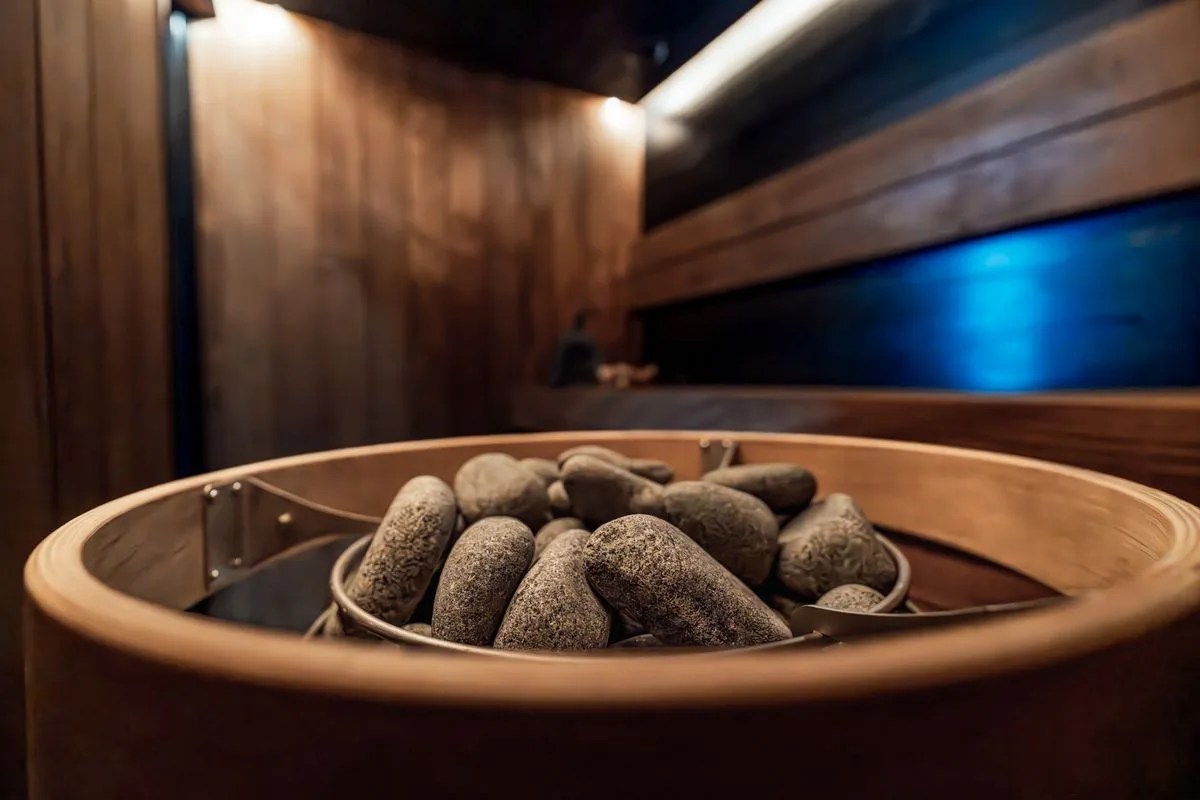 A Finnish-style sauna at the right temperature. 80-100°C, low humidity, 15-20 minutes.
Most gym marketing treats pool and sauna as selling-point bullet points. That undersells what the combination actually does.
What heat does (the sauna side)
A Finnish sauna at 80-100°C raises your core body temperature, dilates blood vessels, increases heart rate to a level comparable to moderate-intensity exercise, and triggers a cascade of cardiovascular responses. This is not a luxury feature.
The evidence behind that is Laukkanen et al. (2016), a 20-year Finnish cohort study tracking more than 2,000 middle-aged men. People who used a sauna 4 or more times per week had a 40% reduction in cardiovascular mortality risk compared to people who went once a week. It held after adjusting for other health behaviours.
One caution when you see sauna figures set against exercise figures, as they often are: the sauna research reports cardiovascular mortality, while most exercise research reports all-cause mortality. Those are different endpoints and the percentages are not interchangeable, so any headline claiming one "beats" the other is comparing two different things. Sauna use and training are not substitutes in any case — the evidence has them compounding.
The active variable in the Laukkanen data is frequency, not duration. 15-20 minutes at temperature followed by a cool-down, 2-3 times a week, already shows meaningful benefit; 4 or more is where the cardiovascular protection becomes clinically significant. Which makes access — not motivation — the thing that usually decides whether it happens.
What cool water does (the pool side)
Moving from heat to cool water activates the parasympathetic nervous system. Heart rate drops. Blood vessels constrict then dilate. Core temperature normalises. Inflammation markers decrease. The effect is not the same as going from the sauna to a cold shower in a changing room. An actual pool — cool but not freezing — gives you enough time in the water to let the physiological reset happen properly.
After a training session, this matters. Delayed onset muscle soreness reduces. Recovery accelerates. Sleep that night tends to improve.
What happens when you combine them
Heat. Cool. Rest. Repeat once if you have time.
This is contrast therapy, and it has been used in Scandinavian fitness culture for decades. It is not a trend. It is a protocol. And it requires both elements to be in the same building, which is the logistical constraint that makes this facility type genuinely useful rather than just aspirationally nice.
The heat-and-water protocol, step by step
Having the facilities in one building only pays off if you know what to do with them. The structure below is the one the Finnish research is built on, and it is deliberately simple.
Gym floor: 40-60 minutes. Technogym equipment — cardio, resistance, free weights. Self-directed, your programme, your pace. No class to follow and no waiting on a station because the 6pm group ran late.
Warm up into the heat: 5 minutes. Light movement, or a few minutes in the jacuzzi. Raise body temperature gently before full heat exposure.
Sauna, first round: 12-15 minutes. Finnish dry heat, 80-100°C, low humidity. Breathe steadily and let the heat work. If it is your first time, 8-10 minutes is plenty.
Pool: 5-10 minutes. Into the water straight after the sauna. Easy laps or a slow float. Let your breathing settle.
Rest: 5 minutes. Sit or lie down at room temperature and let the body equilibrate.
Repeat the heat-water-rest cycle two or three times.
Optional finish in the jacuzzi: 10 minutes. Warm hydrotherapy at the end relaxes muscle tone and closes the loop on the training stimulus.
Total: 60 to 90 minutes including the gym floor. Run three or four times a week, that is the frequency behind the Laukkanen cardiovascular data. Nothing about it is complicated. It only requires the sauna and the pool to be thirty seconds apart — which is the part most people have never actually had.
The problem with most gym + pool + sauna setups in Malta
Having the amenities on the same postcode is only half the picture.
Crowding
A sauna with capacity for 6 people that regularly runs at 12 is not functioning as a sauna. It is a hot, overcrowded room. The cardiovascular benefit is still there, broadly, but the experience and the protocol are compromised. Peak hours at Malta's larger gym-and-pool facilities mirror gym peak hours: 6-8am and 6-8pm on weekdays. If you go at those times, expect to wait.
Class-schedule dependency
The largest gym-pool combinations in Malta are class-heavy. More than 40 classes per week means the facility is designed around timetable attendance. If you do not fit into a class, you are working around the facility's primary audience, not with them. The pool schedule, the aerobics studio, the group cycle space — these are all optimised for class traffic, not self-directed use.
Two-venue friction
Many people in Malta pay for a standard gym membership somewhere and a spa or pool membership somewhere else. Two direct debits. Two locations. Two sets of locker-room logistics. The friction compounds over time. When your schedule tightens, one of them gets skipped first, then permanently.
A single membership that covers both without requiring you to choose which venue to go to on any given day removes that decision.
What to actually look for (beyond the amenity list)
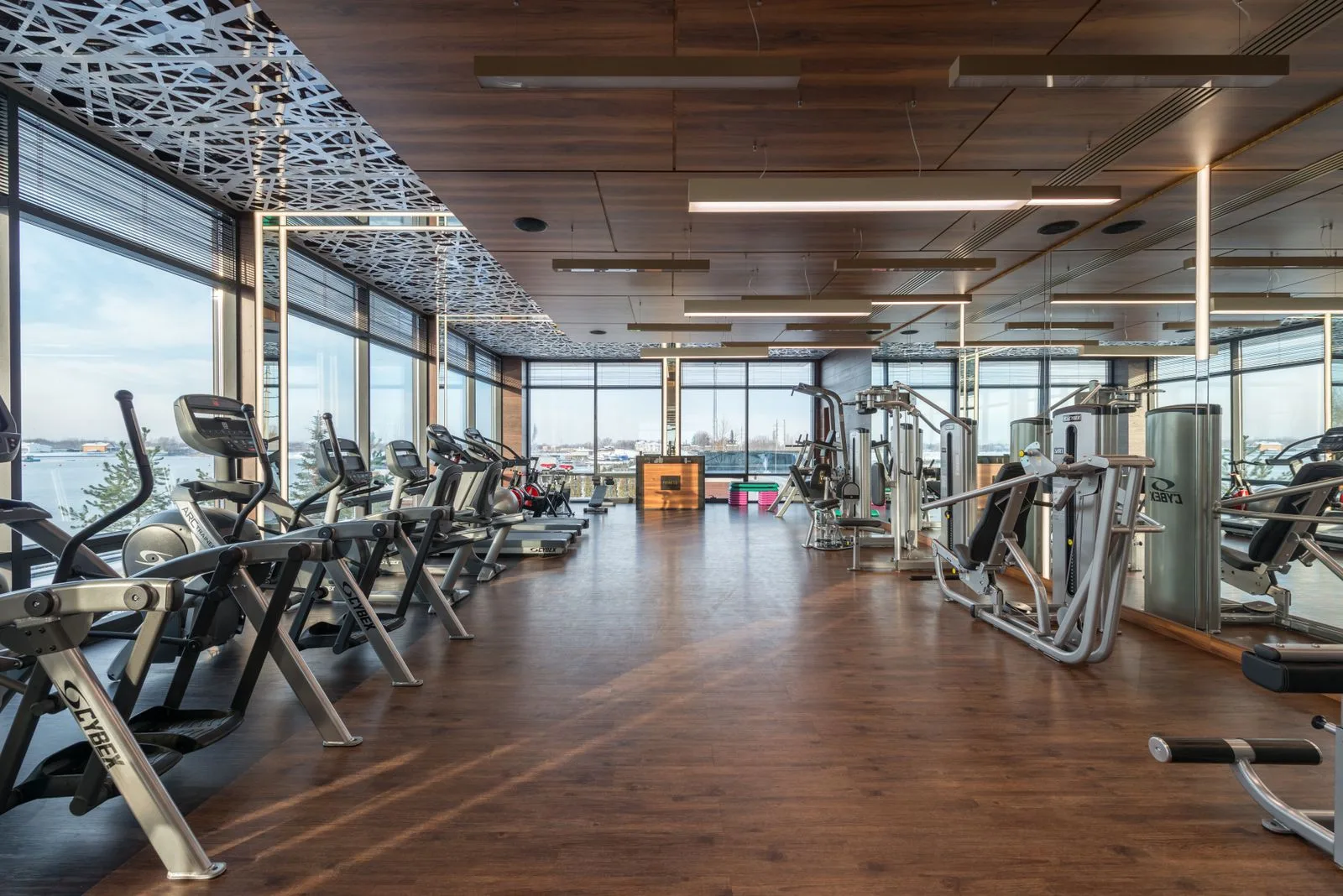 The gym itself should match the recovery suite. Equipment quality tells you how seriously a facility takes the full picture.
When you find a gym with pool and sauna in Malta, these are the questions that actually matter before you sign up.
What type of sauna? Finnish dry heat and steam rooms are different experiences with different protocols. Some facilities offer both; some label a steam room as a sauna. Ask specifically: dry or steam, and at what temperature.
Is there a cool pool, or just showers? Contrast therapy requires cool submersion, not a cold shower. Check whether the pool is kept at a genuinely cool temperature or is a standard heated swimming pool. They both have value, but they are different.
What are the membership terms? Month-to-month flexibility versus 12-month lock-in changes the risk of joining. If you have never trained at this type of facility before, a trial option matters. Compare what each tier includes and what it costs before you compare anything else.
How crowded does it actually get? Ask about peak hours and whether there is a membership cap. A facility that will tell you honestly when the sauna is at capacity is one that is managing the experience, not just selling memberships.
What is the equipment standard in the gym itself? Recovery facilities are only half the picture. A sauna next to a gym with worn-out, poorly maintained equipment tells you where the facility's priorities actually are. Technogym is the standard used by AC Milan, FC Barcelona, and the Olympic Games. It is a proxy for how seriously a facility takes the training side.
What is the location relative to where you actually are? A gym with pool and sauna 30 minutes away that you visit twice a month is worth less than a gym with pool and sauna 8 minutes from your desk that you visit three times a week. If you work or live near Valletta and Floriana, location becomes a health variable, not just a convenience.
How Pulse Wellness Club fits this picture
Pulse Wellness Club in Floriana is not a traditional gym. It does not run a class schedule. It does not have a timetable you need to work around.
What it has: Technogym open gym, indoor cool pool, Finnish-style sauna, steam room, jacuzzi, locker rooms with showers, and the Admiral's Landing lounge with views out over the harbour. All under one membership. Members-only, which means the sauna is at capacity for 6 people, not 16. The pool, sauna and jacuzzi sit within a few steps of one another, which is the whole reason a contrast circuit is workable here and not at a gym where the sauna is an afterthought by the lockers.
It is open 7am to 9pm, every day of the year. 98 hours per week. The 7am opening catches the safe pre-heat window in Malta's summer months. The 9pm close covers the post-work, post-commute slot. There is no time of day when you cannot get there.
Pricing: Pulse Wellness Club membership: Off-Peak €69 per month, All Access €99 per month, VIP €149 per month. Every tier includes the full Technogym floor, indoor pool, Finnish sauna, jacuzzi, relaxation room and The Admiral's Landing lounge. VIP adds one expert massage by Carisma Spa each month. Context: a comparable gym-and-pool combination in St. Julians starts at €84/month without the Valletta location, the members-only scale, or the full recovery suite.
If you have been searching for a gym with sauna near Valletta, or have been splitting two memberships across two venues, Pulse is the single option that covers both without a detour.
FAQs about gym with pool and sauna in Malta
Is there a gym with a pool and sauna near Valletta?
Yes. Pulse Wellness Club in Floriana sits within 8 minutes' walk of Valletta City Gate and combines a Technogym open gym with an indoor pool, Finnish-style sauna, and jacuzzi. Most other gym + pool + sauna combinations in Malta are located in St. Julians, 20 or more minutes from Valletta. Pulse is the only option of this type accessible directly from the Valletta bus terminus.
What is the difference between a sauna and a steam room at a gym?
A sauna uses dry heat, typically between 80 and 100°C, with low humidity. A steam room uses moist heat at lower temperature (around 40-50°C) but near 100% humidity. Both raise core body temperature and promote circulation. Finnish-style saunas are associated with the strongest cardiovascular evidence in the research literature, including a 40% reduction in cardiovascular mortality risk at 4 sessions per week (Laukkanen et al., 2016). Some gyms in Malta offer both; some offer only one. Check before you join.
How much does a gym with pool and sauna cost in Malta?
Pricing varies with what is bundled into the rate. In St. Julians, Cynergi's full-access tier is around €84 a month with the pool and heat suite included; LivingWell at the Hilton sells fixed-length access — €85 for 7 days, €150 for 28 days — rather than a rolling monthly membership, so the two are not directly comparable. The comparison table above sets the options side by side. Prices last checked: August 2026. Pulse Wellness Club membership: Off-Peak €69 per month, All Access €99 per month, VIP €149 per month. Every tier includes the full Technogym floor, indoor pool, Finnish sauna, jacuzzi, relaxation room and The Admiral's Landing lounge. VIP adds one expert massage by Carisma Spa each month.
Can I use a gym's sauna and pool without a full membership?
Some facilities in Malta offer day passes or short-term options. Pulse Off-Peak is €69 a month as an entry point — it includes full access to all facilities including the pool, Finnish sauna, and jacuzzi, on the off-peak window, 10am to 4pm. This is designed for people who want to experience the full recovery suite before committing to a full-access tier. To see what's included, book a tour and we will walk you through everything.
How often should I use a sauna to see health benefits?
The most cited study (Laukkanen et al., 2016) found that 4 or more sauna sessions per week correlated with a 40% reduction in cardiovascular mortality risk compared to once per week. Even 2-3 sessions per week showed meaningful benefit. Most protocols recommend 15-20 minutes per session at 80-100°C, followed by a cool-down period. Access to an adjacent cool pool makes the cool-down practical rather than theoretical. For more on how sauna use fits alongside training, the Valletta gym with sauna post goes into the protocol in depth.
Is a gym with a pool and sauna worth the extra cost?
It depends what you compare it against. If you are currently paying for a gym and a separate spa or pool membership, combining them almost certainly saves money and removes logistical friction. If you are comparing a gym-with-recovery-suite to a basic-gym-only option, the premium is typically €30-60 per month. The relevant question is whether you will actually use the recovery facilities — and if you can access them without planning a separate trip, the honest answer for most people is yes.
If you have been paying for two memberships, or looking for a gym with pool and sauna in Malta that does not require a drive to St. Julians, Pulse Wellness Club in Floriana is the one option in this part of the island that covers all of it. Open gym, indoor pool, Finnish sauna, jacuzzi. Members-only. 7am to 9pm, every day.
Come and see the space before you decide. Book a tour — it takes 20 minutes and answers every question a facility page cannot.